

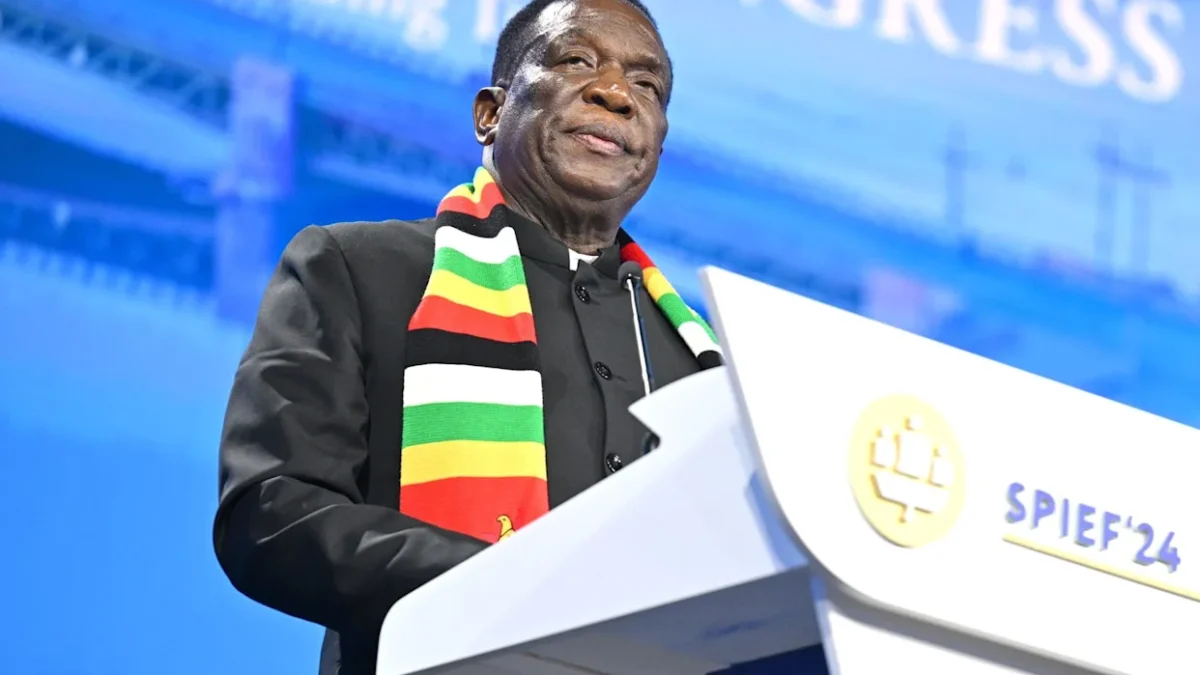
The lower house of Zimbabwe’s parliament has passed a sweeping constitutional amendment bill that extends the presidential term from five to seven years, paving the way for President Emmerson Mnangagwa to remain in office until 2030.
During the vote in the National Assembly, Speaker of Parliament Jacob Mudenda announced that 216 lawmakers backed the legislation, comfortably clearing the 187-vote threshold required for a two-thirds majority to amend the constitution, while 42 lawmakers voted against it.
The bill radically restructures Zimbabwe’s political architecture by completely scrapping direct presidential popular elections, shifting the mandate so that future heads of state will be elected via a joint sitting of parliament.
The constitutional changes represent the culmination of an aggressive legislative campaign initiated by the ruling ZANU-PF party, which has governed the nation since independence in 1980.
Under the prior constitutional frameworks adopted in 2013, the 83-year-old Mnangagwa—popularly nicknamed “the crocodile” for his political survival skills—was legally barred from seeking another term and was scheduled to step down when his final five-year mandate expired in 2028.
By deferring the next scheduled parliamentary and general election cycle from 2028 to 2030, the new law effectively grants the incumbent president an additional two years in power without facing voters.
The sweeping legislation has ignited intense political condemnation from opposition lawmakers, civic groups, and constitutional lawyers who accuse the government of severe democratic backsliding.
Critics argue that altering foundational constitutional clauses such as term limits legally demands endorsement through a national public referendum, rather than being pushed purely through a ZANU-PF-dominated parliament.
Legal activists had launched various high-profile court challenges attempting to freeze the parliamentary process on the grounds that a sitting president cannot legally benefit from extensions to their own tenure.
However, Zimbabwe’s Constitutional Court dismissed the main legal challenges on technical grounds just a day prior to the legislative vote, clearing the floor for the ruling party’s supermajority.
Government representatives and ruling party stalwarts have strongly defended the overhaul, framing the transition to seven-year terms as a mechanism to safeguard institutional efficiency, policy continuity, and long-term economic stability.
They contend that longer political cycles alleviate the immense economic strain of frequent national campaigning, allowing the state to focus on developmental goals.
Following the decisive victory in the National Assembly, the draft legislation now heads directly to the Senate.
Given ZANU-PF’s firm control over both legislative chambers, the upper house is widely expected to grant swift approval before forwarding the document to President Mnangagwa for his official executive signature into law.

