

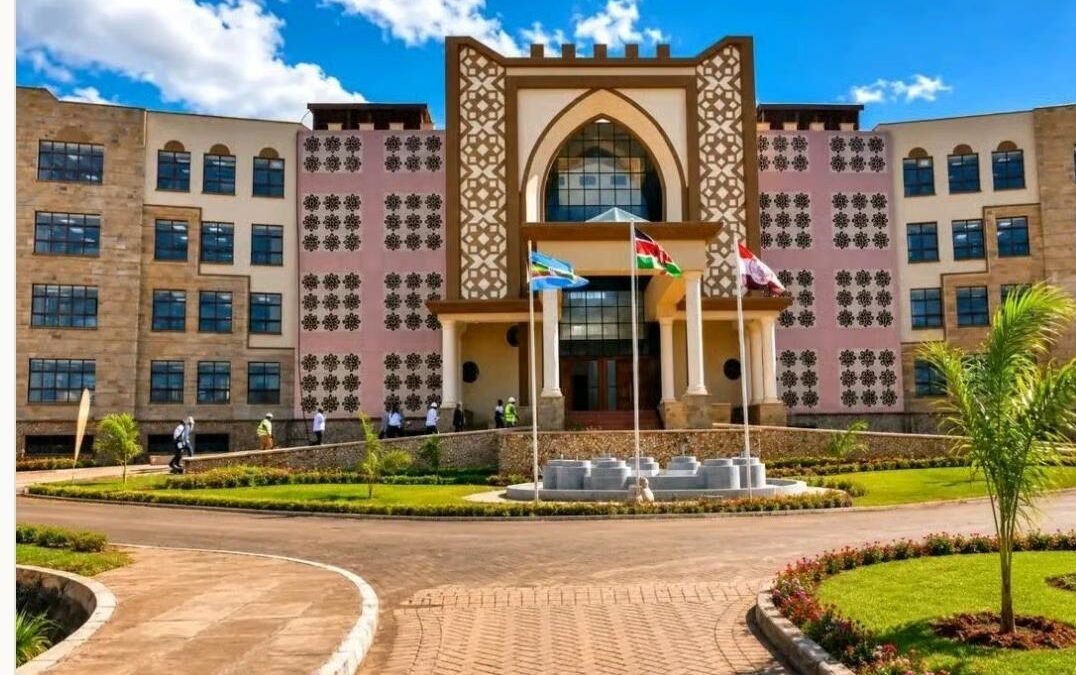
Former Tourism Cabinet Secretary Najib Balala is at the centre of renewed scrutiny over the troubled Ronald Ngala Utalii College project, following allegations of a KSh100 million upfront demand from a contractor, questionable consultancy payments and a multibillion-shilling construction undertaking that remained unfinished for years despite substantial public expenditure.
Balala, who is now reportedly residing in Madrid, Spain, according to information supplied to this publication, was among senior government officials prosecuted over alleged irregularities surrounding the tourism training institution in Vipingo, Kilifi County.
The project, originally conceived to expand hospitality training at the Coast, became entangled in procurement disputes, questionable financial decisions, parliamentary investigations and criminal proceedings.
At the heart of the controversy is how an institution initially estimated to cost approximately KSh1.95 billion developed into a project whose financial exposure was projected to reach KSh11 billion.
Investigations by the Ethics and Anti-Corruption Commission (EACC) raised questions about the procurement of consultants, professional fees and the decisions made by senior officials within the Ministry of Tourism and Tourism Fund.
The scrutiny extended to Balala, whose ministerial decisions formed part of criminal charges filed in December 2023.
Although the prosecution was subsequently withdrawn without convictions, questions surrounding the historical management of the project remain.
Further allegations supplied to this publication concerning an alleged KSh100 million upfront demand have introduced another issue requiring scrutiny of the project’s financial and administrative history.
For Kenyan taxpayers, Ronald Ngala has become a case study in how prolonged construction, governance weaknesses, procurement controversies and financing difficulties can turn a public investment into a multibillion-shilling burden.
Alleged KSh100 Million Demand Raises Questions Over Project Payments
Among the allegations now surrounding the project is a claim that Balala allegedly demanded KSh100 million upfront from a contractor, with the alleged understanding that failure to comply would result in the project being stopped and payments withheld.
According to information supplied to this publication, the alleged demand involved using control over the project’s implementation and payment processes as leverage against the contractor.
The allegation raises questions about whether financial demands outside the contractual framework influenced the administration of Ronald Ngala Utalii College.
How a KSh1.95 Billion Project Became a Multibillion-Shilling Controversy
Ronald Ngala Utalii College traces its origins to February 1, 1996, when Cabinet approved the establishment of a Coast branch of Kenya Utalii College.
The institution was intended to address the growing demand for professionally trained personnel within Kenya’s tourism and hospitality industry.
Financial constraints initially delayed implementation.
When the government revived the proposal in 2007, the estimated cost stood at approximately KSh1.948 billion, with the proposed institution expected to accommodate about 600 students.
However, the project underwent a significant transformation in December 2010.
The Catering and Tourism Development Levy Trustees, the predecessor of Tourism Fund, resolved to redesign the institution to accommodate approximately 3,000 students.
The expanded concept incorporated academic and administrative buildings, student accommodation, staff facilities, dining infrastructure and specialised hospitality training spaces.
A hotel component was also included to support practical training.
The enlarged development pushed the projected cost towards KSh8.9 billion.
Although the expanded scope accounted for part of the increase, the financial decisions surrounding the project subsequently attracted serious scrutiny.
In 2013, the principal construction contract was awarded at approximately KSh8.961 billion.
The government later reconsidered the development and rationalised the immediate construction component to approximately KSh4.923 billion in 2014.
Despite the restructuring, financing difficulties persisted.
By March 2023, Parliament reported that the project, whose rationalised construction component had been expected to cost approximately KSh4.9 billion, was projected to consume up to KSh11 billion.
EACC separately investigated allegations that approximately KSh8.5 billion had been paid towards establishing the college and that the project had been inflated from approximately KSh1.95 billion to KSh10.4 billion.
The figures relate to different stages and financial aspects of the development and cannot all be treated as money stolen or added together as a single expenditure total.
However, they demonstrate the substantial financial exposure that made Ronald Ngala a recurring subject of parliamentary and anti-corruption investigations.
Balala’s Controversial Consultancy Decisions
Balala’s involvement in the project became a central issue in the criminal investigations.
In December 2010, professional consultants were engaged to undertake design, documentation, supervision and contract administration functions for the proposed college.
The consortium included Baseline Architects Limited, Ujenzi Consultants, Armitech Consulting Engineers and West Consult Engineers.
The consultants were expected to provide professional services necessary for implementing the development.
However, their engagement and subsequent payments became the subject of corruption investigations.
Prosecutors later accused Balala and former Tourism Permanent Secretary Leah Adda Gwiyo of abuse of office in connection with the December 2010 decision to engage the consultancy firms.
The prosecution alleged that the decision resulted in irregular consultancy payments running into billions of shillings.
Balala and Gwiyo denied the charges.
The allegations raised questions about the circumstances under which the consultants were engaged, whether procurement requirements were followed and how the resulting financial commitments were authorised.
The consultancy arrangements were particularly significant because professional teams involved in major construction projects influence design, supervision, certification and contract administration.
Any irregularity in their procurement or remuneration can consequently have financial implications extending beyond the consultancy fees themselves.
The Ronald Ngala investigation therefore examined not merely whether consultants had been paid, but whether the relevant decisions and payments complied with procurement and financial requirements.
## Tourism Fund’s Troubled Oversight
The Tourism Fund became another major institution implicated in the controversy.
As the body responsible for implementing the college, it administered procurement processes, construction commitments and payments associated with the project.
However, parliamentary investigations identified significant governance concerns during important stages of implementation.
In July 2012, the then Tourism Minister revoked the appointments of members of the Board of Trustees and appointed a new board.
The former trustees challenged the decision before the High Court.
Although the case was withdrawn in April 2013, parliamentary investigations subsequently established that Tourism Fund remained without a substantive Board of Trustees until October 2, 2015.
A chairman was appointed in March 2016.
This period overlapped with major procurement and construction commitments associated with Ronald Ngala.
The governance gap raised questions about the oversight mechanisms available to supervise management, authorise expenditure and interrogate contractual decisions involving billions of shillings.
For an institution responsible for such a substantial public investment, clear accountability structures were essential.
Parliament subsequently examined the decisions made during the period and the implications of the absence of a substantive board.
The investigation into the college eventually extended to former Tourism Fund executives and other officials associated with procurement, financial management and contract administration.
The controversy demonstrated how weaknesses in institutional oversight can complicate accountability when public projects encounter financial and procurement difficulties.
## Consultants Accused of Receiving Questionable Payments
Professional consultancy payments formed a major component of EACC’s investigation.
The prosecution alleged that some consultants received payments exceeding the value of services performed.
Joseph Odero of West Consult Engineers faced a separate allegation concerning approximately KSh292 million.
Prosecutors alleged that the company acquired the amount through fee notes exceeding the value of work performed.
Other allegations involved professional payments associated with Baseline Architects, Ujenzi Consultants and additional members of the consultancy consortium.
The investigators examined the procurement arrangements, consultancy expenditure and compliance with applicable financial requirements.
These allegations were especially consequential because the consultants were engaged to support the proper planning and supervision of a project involving substantial public expenditure.
The investigations sought to establish whether consultancy payments were justified by contractual obligations and actual work performed.
They also examined decisions made within the government institutions responsible for approving the engagements and administering payments.
The accused denied the allegations, and the subsequent withdrawal of the prosecution meant that the contested payments were not determined through a completed criminal trial.
Nevertheless, the issues raised by investigators remain part of the documented history of Ronald Ngala Utalii College.
## Parliament Intervenes as Billions Remain Tied Up
As the project continued to experience delays, Parliament launched investigations into its implementation.
The National Assembly’s Public Investments Committee examined the establishment of the institution, project redesign, procurement of consultants, construction contracts, financing and governance arrangements.
Its special report, dated May 24, 2017, established a detailed parliamentary record of the development.
The committee received evidence from government officials, former officials, contractors, consultants, procurement authorities and the National Treasury.
The inquiry examined how the original proposal had evolved into a much larger development and the financial consequences of the decisions taken during implementation.
Parliament returned to the controversy through another inquiry in 2021.
By July 2022, the college was reportedly approximately 77.5 percent complete.
Despite the substantial resources already committed, the institution was still unable to train students.
The delays meant that taxpayers continued financing a major public asset without receiving the intended educational benefits.
Hotels, restaurants, resorts and other tourism businesses at the Coast continued requiring professionally trained workers while the institution established to meet that demand remained unfinished.
In March 2023, the National Assembly’s Departmental Committee on Tourism and Wildlife directed the Ministry to halt construction pending completion of a parliamentary probe.
The committee demanded that the National Treasury provide a financing roadmap addressing completion costs, outstanding payments and penalties associated with delayed settlement of obligations.
By then, approximately 27 years had passed since the original Cabinet decision.
The project had become a recurring source of concern over expenditure, implementation delays and value for money.
## Balala Arraigned Over Alleged Abuse of Office
The EACC investigation eventually resulted in criminal proceedings against former senior government officials and private consultants.
In December 2023, Balala appeared before the Malindi court alongside former Tourism Permanent Secretary Leah Adda Gwiyo and Joseph Odero of West Consult Engineers.
Balala and Gwiyo faced abuse-of-office allegations concerning the engagement of professional consultants in December 2010.
They denied the charges.
Further accused persons subsequently appeared before the court, bringing the number who had taken pleas to 12 by the end of December 2023.
The proceedings included former Tourism Fund chief executives Allan Wafula Chenane and Joseph Rotich Cherutoi.
Other accused persons were associated with procurement, strategy, standards and professional consultancy functions.
The charges covered alleged abuse of office, failure to comply with procurement requirements and unlawful acquisition of public property.
The prosecution represented a significant development in attempts to establish criminal responsibility for alleged irregularities surrounding Ronald Ngala.
However, the case never proceeded to a completed trial.
## Criminal Case Withdrawn Despite EACC Opposition
On July 31, 2024, the Malindi court allowed an application by the Office of the Director of Public Prosecutions to withdraw the Ronald Ngala proceedings.
The accused were discharged under Section 87(a) of the Criminal Procedure Code.
EACC publicly opposed the withdrawal.
The disagreement between the investigating agency and the prosecution marked another controversy in the project’s accountability history.
The withdrawal ended the criminal case without convictions.
It also meant that the allegations against Balala and the other accused were not established through a completed trial.
However, the termination of the proceedings did not provide a comprehensive financial accounting of every decision, payment and contractual obligation associated with the project.
Questions surrounding the procurement of consultants, the payment of professional fees and the financial consequences of delayed implementation remained matters of public interest.
The distinction is important: the withdrawal of criminal charges is not a finding of criminal guilt, but neither does it replace the need for public institutions to explain how substantial government resources were managed.
The controversy consequently extends beyond the legal outcome of the individual criminal proceedings.
It concerns the wider administrative and financial accountability of a project that remained unfinished for years despite multibillion-shilling commitments.
## Balala’s Reported Relocation to Madrid
Balala is now reportedly living in Madrid, Spain, according to information supplied to this publication.
His reported relocation comes after his departure from government and the withdrawal of the Ronald Ngala criminal proceedings.
The information available for this article does not establish that his residence abroad is connected to the project or the withdrawn case.
Nevertheless, his role in the historical management of Ronald Ngala remains a matter of legitimate public scrutiny.
As former Tourism Minister and later Cabinet Secretary, Balala held senior public office during important stages of the institution’s development.
Decisions associated with his tenure subsequently featured in corruption investigations and criminal proceedings.
The public-interest questions concern those decisions, the approval of consultancy arrangements and the financial consequences of implementation.
Whether residing in Kenya or abroad, former public officials can reasonably be asked to account for decisions made while exercising public authority.
In the case of Ronald Ngala, those questions remain particularly significant because Parliament continued seeking explanations long after the criminal case was withdrawn.
## Bitok Inherits a Troubled Institution
The administration of Tourism Principal Secretary Prof. Julius Bitok inherited an institution whose earlier construction and procurement history had been marked by persistent controversy.
By the time Bitok assumed responsibility for the tourism portfolio, the major construction contracts, historical consultancy arrangements, parliamentary investigations and criminal proceedings had already taken place.
His administration shifted attention towards operationalising the institution.
During an inspection of the Vipingo campus on July 23, 2026, Bitok reported that the college was approximately 95 percent ready for occupation.
The government announced plans to receive its first cohort of students on September 1, 2026.
Working with Kenya Utalii College, Tourism Fund, KUCCPS, HELB and other stakeholders, the State Department for Tourism pursued preparations for an inaugural intake of approximately 1,000 students.
KUCCPS subsequently approved 13 diploma and certificate programmes covering hospitality management, culinary arts, food and beverage operations, housekeeping, tourism management and tour guiding.
The developments represented a significant shift from years of construction disputes and financial investigations towards the institution’s intended educational purpose.
However, operationalisation does not erase the accountability questions arising from the project’s earlier implementation.
## Who Accounts for the Billions?
The Ronald Ngala controversy returned to Parliament on July 31, 2025, when Kilifi North MP Owen Baya demanded a comprehensive statement concerning the project.
He sought information about its construction status, expected completion timelines, reasons for delays and measures being taken to operationalise the institution.
He also requested a detailed assessment of the total cost, including penalties and fines, alongside an account of public funds spent since commencement.
Those questions capture the central financial issues surrounding Ronald Ngala.
The government must distinguish between the original project estimate, revised contractual values, actual expenditure, consultancy fees, outstanding payments and projected completion costs.
A comprehensive account is necessary to establish the full financial consequences of the development.
The alleged KSh100 million upfront demand also warrants examination through the relevant contractual, payment and communication records.
Separately, the withdrawn criminal proceedings involving Balala and other accused persons remain an important part of the public record, although no convictions resulted from those charges.
The institution’s opening may finally provide the tourism training opportunities envisioned when the project was first approved in 1996.
But the beginning of academic operations does not settle the questions arising from its construction history.
For Balala, Tourism Fund and the other institutions and individuals involved, the enduring public-interest issue is how the decisions made during implementation affected expenditure, procurement and completion.
Nearly three decades after Cabinet approved Ronald Ngala Utalii College, Kenyan taxpayers still deserve a complete explanation of how the project evolved from an approximately KSh1.95 billion proposal into a development whose projected financial exposure reached KSh11 billion.
They deserve answers about the allegedly irregular consultancy payments, the governance failures, the prolonged delays and the financial obligations accumulated along the way.
They also deserve an examination of the separate alleged KSh100 million demand and whether any contractor faced improper pressure over project implementation or payment.
The college may finally be opening its doors to students, but the historical questions concerning its billions remain part of the public record.
And Balala’s role in the decisions that brought Ronald Ngala under criminal and parliamentary scrutiny remains central to understanding that history.