

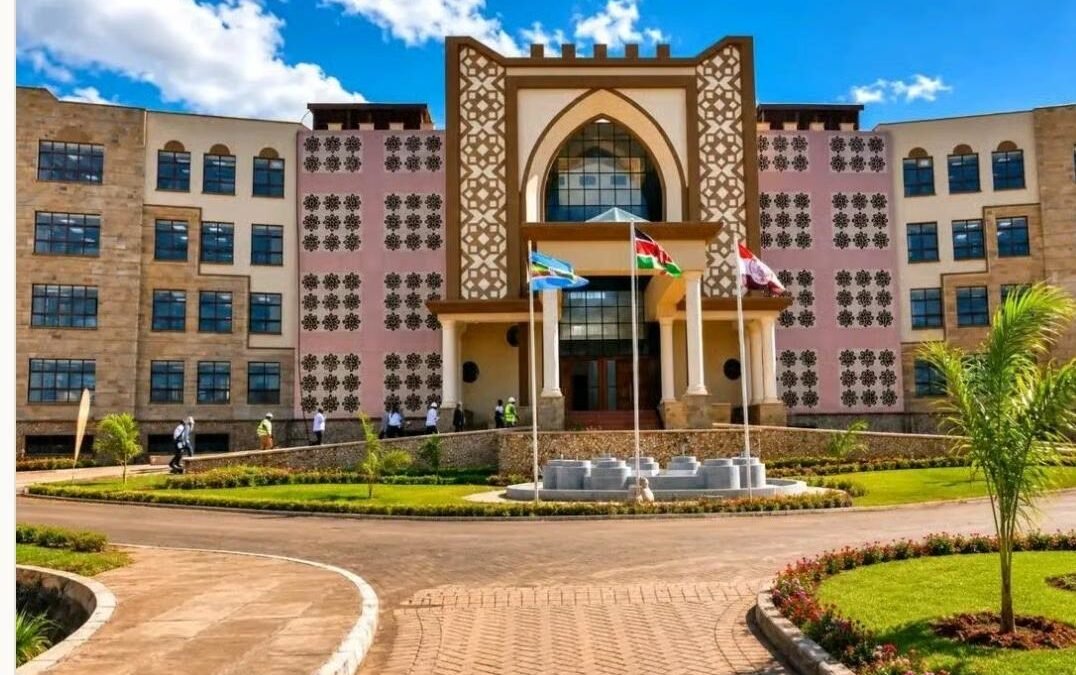
What began as a Sh1.9 billion tourism training project in Kilifi ballooned into a multibillion-shilling financial controversy involving Mulji Devraj & Brothers, disputed procurement decisions, consultancy payments, mounting interest claims and repeated parliamentary investigations.
For nearly three decades, Ronald Ngala Utalii College in Vipingo, Kilifi County, stood as a monument to Kenya’s troubled public infrastructure projects, where billions of shillings were committed to construction while the institution remained unavailable to the students it was meant to serve.
At the centre of the controversy was Mulji Devraj & Brothers Limited, the company awarded the principal construction contract in 2013 at Sh8,961,370,998.
The contractor’s involvement became part of a wider financial controversy involving questionable procurement decisions, changes in construction scope, delayed payments, escalating contractual claims and concerns over the management of public resources.
What began as a government proposal to establish a Coast branch of Kenya Utalii College eventually developed into a project whose financial obligations continued growing even as completion deadlines passed.
Investigations by parliamentary committees, the Auditor-General and the Ethics and Anti-Corruption Commission (EACC) subsequently exposed serious questions surrounding procurement, consultancy payments, governance and expenditure.
By the time Ronald Ngala Utalii College finally admitted its first students in September 2026, its construction history had become inseparable from years of financial controversy.
The institution’s opening marked the end of a prolonged wait, but it did not erase the questions surrounding the billions committed to its development.
How a Sh1.9 Billion College Became a Sh9 Billion Project
The origins of Ronald Ngala Utalii College date back to February 1, 1996, when Cabinet approved the establishment of a Coast branch of Kenya Utalii College through Cabinet Minute No. 13/1996.
The intention was to expand professional tourism and hospitality training closer to Kenya’s coastal tourism industry, which depended heavily on trained personnel working in hotels, resorts, restaurants and tour operations.
However, the proposal remained dormant for approximately eleven years.
When the government revived it in 2007, the proposed institution was estimated to cost Sh1.948 billion and accommodate approximately 600 students.
The National Treasury was expected to finance construction over four years.
However, the project’s financial trajectory changed significantly in December 2010.
The Catering and Tourism Development Levy Trustees, later succeeded by Tourism Fund, approved a redesign that expanded the institution’s capacity from 600 to approximately 3,000 students.
The enlarged development incorporated academic buildings, student accommodation, staff facilities and a hotel training complex.
The estimated cost consequently moved towards Sh8.9 billion.
Although the revised proposal involved a substantially expanded project, questions subsequently emerged about the availability of sufficient financing to support the new development.
Those concerns would follow Ronald Ngala throughout its construction.
Mulji Devraj & Brothers Secures the Sh8.96 Billion Contract
In May 2013, Mulji Devraj & Brothers Limited won the principal construction contract at Sh8,961,370,998.
The award placed the company at the centre of one of the most expensive tourism training projects undertaken by the government.
However, the procurement process later attracted scrutiny.
According to various investigation supplied for this report, Auditor-General Edward Ouko questioned the circumstances surrounding the award after establishing that Mulji Devraj & Brothers had been the third-lowest prequalified bidder.
The contractor’s price was hundreds of millions of shillings above the lowest bid.
The investigation raised questions about whether the decision to award the contract adequately protected the public interest.
The concern was particularly significant because the project had already expanded substantially from its earlier estimated cost.
The construction agreement also placed considerable financial obligations on the implementing agency, which was expected to finance the works through government allocations.
Despite the size of the contract, the project did not have a sufficiently secure financing arrangement to guarantee uninterrupted implementation.
That weakness later became one of the defining features of the Ronald Ngala controversy.
As construction progressed, funding interruptions contributed to delayed settlement of certified payments, exposing the government to additional contractual liabilities.
The Contract Was Reduced, but the Financial Questions Multiplied
In 2014, the government reconsidered the development and reduced the immediate construction scope to approximately Sh4.923 billion.
The rationalisation was intended to concentrate resources on essential academic and residential infrastructure.
The hotel component was separated for possible implementation through a public-private partnership.
However, the reduction did not resolve the project’s financial difficulties.
interim payment certificates continued referring to the original Sh8.96 billion contractual sum.
This raised questions about how expenditure, consultancy fees and other financial obligations were being calculated after the construction scope had been reduced.
The original contract, the rationalised project cost and subsequent financial claims represented different obligations.
Nevertheless, the interaction between those figures made it increasingly difficult to establish the project’s full financial position.
What was meant to be a cost-saving intervention therefore failed to prevent further growth in outstanding liabilities.
The college continued accumulating financial obligations even as its completion date moved further into the future.
How Delays Created Another Financial Burden
One of the most consequential aspects of Ronald Ngala’s construction history was the accumulation of interest and other claims associated with delayed payments.
Under the contractual arrangements, approved work generated payment obligations.
Where those payments were delayed, additional financial claims could arise.
This meant that inadequate financing affected the project in two ways.
First, the shortage of funds slowed construction.
Second, delayed settlement exposed the government to interest and other contractual liabilities, increasing the resources eventually required to complete the institution.
The situation of the unfinished project continued generating invoices and financial claims.
Consultancy supervision charges, interest and contractual obligations became part of the growing financial burden.
Reports reveal that certified costs associated with the institution had climbed beyond Sh14.4 billion.
It also reported approximately Sh2.28 billion in interest penalties accumulated by consultants, which Tourism Fund attributed to delayed Treasury releases.
These figures concerned different components of project expenditure and financial exposure and should not be confused with the amount paid directly to Mulji Devraj & Brothers.
Nevertheless, they illustrate how construction delays transformed a development project into a prolonged financial obligation.
For taxpayers, the consequences extended beyond the amounts appearing in contractual documents.
The institution remained unavailable for training while government resources continued being committed to its construction.
The Consultancy Payments Controversy
Before the main contractor undertook substantial construction work, the procurement of professional services had already generated disputes.
A consortium led by Baseline Architects Limited secured responsibilities involving design, documentation, supervision and contract management.
The procurement attracted a challenge before the Public Procurement Administrative Review Board and subsequently proceeded to the High Court.
Years later, consultancy expenditure became part of the investigations surrounding Ronald Ngala.
A consultancy arrangement initially valued at approximately Sh556.8 million attracted payments approaching Sh817.9 million.
Investigators questioned whether some fee notes exceeded the value of work actually performed.
The professional firms involved in the project included Baseline Architects, Ujenzi Consultants, Armitech Consulting Engineers and West Consult Engineers.
The concern was that professional fees and other payments could continue accumulating while physical construction remained incomplete.
For example, prolonged supervision of an unfinished project could generate additional consultancy obligations, depending on the contractual arrangements.
The dispute therefore extended beyond the construction contractor to the wider network of firms responsible for designing, supervising and administering the development.
Mulji Devraj, the Halai Family and Allegations of Influence
It alleged that individuals associated with the contractor’s circle subsequently pushed for the appointment of a sympathetic Tourism Fund chief executive to facilitate payments.
The allegation introduced another dimension to the controversy: whether private commercial interests could influence management decisions at the public institution responsible for administering the contract.
With billions of shillings involved, decisions taken by Tourism Fund management had significant consequences for public expenditure.
Tourism Fund Operated Without a Substantive Board
The controversy unfolded against a troubled governance background.
In July 2012, the then Tourism Minister revoked the appointments of the existing Board of Trustees and appointed another board.
The former trustees challenged the decision through High Court proceedings.
Although the case was withdrawn in April 2013, parliamentary investigations subsequently established that Tourism Fund remained without a substantive Board of Trustees until October 2015.
The governance vacuum coincided with important procurement and financial decisions concerning Ronald Ngala, including the period when the main construction contract was awarded.
Parliament subsequently examined the implications of this absence of oversight.
The concerns centred on how an institution administering a multibillion-shilling development could approve expenditure, supervise management and interrogate contractual decisions without a substantive board.
The governance dispute became another important element in understanding how Ronald Ngala’s implementation developed into a prolonged financial controversy.
EACC Investigations Expose Billions in Questioned Expenditure
The financial concerns eventually attracted the attention of EACC.
The commission investigated allegations involving planning, budgeting, procurement, consultancy arrangements and payments made through Tourism Fund.
According to the supplied document, EACC alleged that approximately Sh8.5 billion had been paid towards establishing the institution.
Investigators also alleged that the project’s cost had increased from approximately Sh1.95 billion to Sh10.4 billion.
They questioned the circumstances surrounding the procurement of consultants and the financial commitments entered into during implementation.
The commission subsequently submitted investigation files to the Office of the Director of Public Prosecutions, recommending action against former officials and private-sector actors.
The investigation established the basis for criminal proceedings that followed in December 2023.
However, the amounts cited during the investigation represented allegations about expenditure and financial irregularities, rather than judicial findings establishing that all the money had been stolen.
The distinction is particularly important because the controversy involved several companies, separate contractual arrangements and different categories of expenditure.
Najib Balala and Former Officials Taken to Court
In December 2023, former Tourism Cabinet Secretary Najib Balala, former Permanent Secretary Leah Adda Gwiyo and engineer Joseph Odero of West Consult Engineers appeared before the Malindi court.
Balala and Gwiyo faced abuse-of-office allegations connected to the December 2010 decision to engage professional consultants.
Prosecutors alleged that the decision resulted in irregular consultancy payments running into billions of shillings.
Odero faced a separate allegation involving approximately Sh292 million in fee notes allegedly exceeding the value of work performed.
Former Tourism Fund chief executives Allan Wafula Chenane and Joseph Rotich Cherutoi were also among those brought before the court.
The charges covered alleged abuse of office, failure to comply with procurement requirements and unlawful acquisition of public property.
By the end of the December proceedings, twelve accused persons had taken pleas.
All denied the charges.
The Criminal Case That Ended Without Convictions
The prosecution did not proceed to a completed trial.
On July 31, 2024, the Malindi court allowed an application by the Office of the Director of Public Prosecutions to withdraw the case.
The accused were discharged under Section 87(a) of the Criminal Procedure Code.
EACC publicly opposed the withdrawal, creating a disagreement between the investigating agency and the prosecution.
The outcome meant that the allegations were not determined through a completed criminal trial.
No convictions arose from the withdrawn proceedings.
The withdrawal did not resolve the wider questions raised in audit reports and parliamentary investigations about project expenditure, procurement and financial management.
For Ronald Ngala, the criminal case became another chapter in a history where serious accountability questions had repeatedly emerged without producing a comprehensive resolution of the project’s financial record.
Parliament Intervenes as the College Remains Unfinished
Parliament had been examining Ronald Ngala long before the criminal proceedings.
The Public Investments Committee’s May 2017 special report traced the project from its original approval through redesign, procurement, construction and financial difficulties.
Another parliamentary inquiry followed in 2021.
In March 2023, the Departmental Committee on Tourism and Wildlife visited the Vipingo campus and directed that construction be halted pending further investigation.
The committee demanded that the National Treasury produce a financing roadmap explaining how outstanding work and pending bills would be addressed.
Parliament was informed that a project rationalised to approximately Sh4.9 billion was heading towards Sh11 billion when financial obligations and unfinished work were considered.
The situation raised questions about whether continued delays were increasing the eventual completion cost faster than available financing could resolve it.
By July 31, 2025, Kilifi North MP Owen Baya was still demanding a comprehensive account of the project.
He sought explanations concerning expenditure, penalties, construction progress and the work remaining before the college could open.
The questions were substantially similar to those raised in earlier investigations.
The Coast Paid the Price of the Delays
While contractors, consultants and government agencies disputed financial obligations, the intended beneficiaries of Ronald Ngala continued waiting.
The college had been designed to expand training opportunities for young people seeking employment in hospitality and tourism.
Its location in Vipingo placed it close to Kenya’s coastal tourism industry, where hotels, resorts and tour operators required trained personnel.
Instead, substantial public investment remained tied up in infrastructure that could not deliver its intended educational services.
The supplied Kenya Insights investigation reported concerns about deterioration in sections of the buildings, including mould and cracks.
The project was approximately 77.5 per cent complete in July 2022, years after its original expected completion date.
Construction delays also meant that academic buildings, student accommodation and practical training facilities remained unavailable.
The financial consequences were therefore accompanied by lost years of training opportunities.
The institution’s prolonged construction affected not only government finances but also students who could have benefited from the facility.
College Finally Opens in September 2026
After decades of uncertainty, Ronald Ngala Utalii College finally began receiving students on September 1, 2026.
Tourism Principal Secretary Prof. Julius Bitok had reported in July that the institution was approximately 95 per cent ready for occupation.
The State Department for Tourism worked with Kenya Utalii College, Tourism Fund, KUCCPS, HELB and other stakeholders to prepare the inaugural intake.
The institution opened with thirteen approved diploma and certificate programmes covering hospitality management, culinary arts, food and beverage operations, front-office services, housekeeping, travel management and tour guiding.
Its operationalisation marked a significant departure from decades of construction disputes, parliamentary investigations and financial controversy.
However, the opening did not settle the questions surrounding the historical expenditure.
The financial record still requires clear distinctions between amounts paid, certified work, outstanding contractual obligations, disputed claims, interest and projected completion costs.
Mulji Devraj & Brothers remains central to that history because of its multibillion-shilling construction contract and the procurement and payment controversies surrounding the development.
The outstanding public-interest questions concern whether the procurement decisions were properly justified, whether payments corresponded to verified work, how additional claims were assessed and whether taxpayers ultimately received value for the resources committed.
After years of delays and billions of shillings in financial obligations, Ronald Ngala Utalii College has finally begun serving students.
The classrooms are now open, but the long-running questions over the money, the contracts and the decisions that prolonged construction remain part of the institution’s public record.