
President William Ruto has once again shown that when he sets his mind on something, it gets done, and fast.
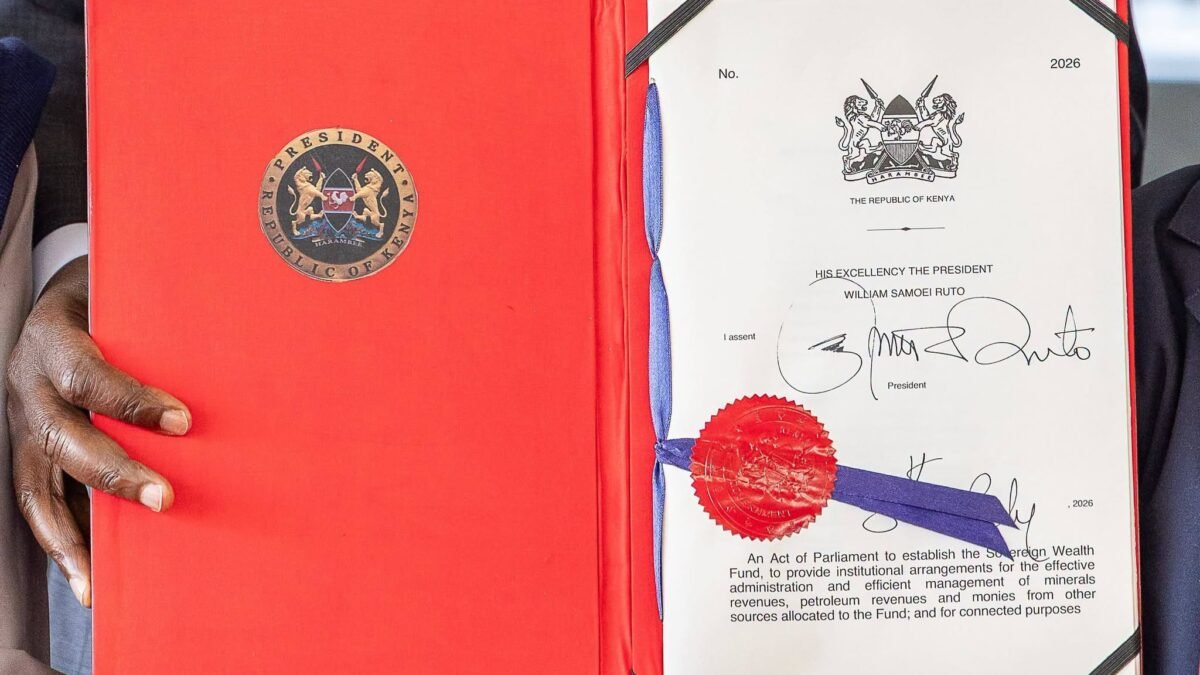
On Tuesday, he signed into law the Sovereign Wealth Fund Bill, 2026, officially creating the Kenya Sovereign Wealth Fund (KSWF). A bold, forward-looking move that will manage revenues from minerals, petroleum, public investments, and privatisation proceeds, while saving a good chunk of it, 30 per cent, to be exact, for future generations.
In a country where politicians and public servants often have been accused of eating everything today and leaving nothing for tomorrow, this law feels like a breath of fresh air.
The speed with which this bill moved from paper to law is classic Ruto. Efficient, focused, and politically sharp.
The bill was published on February 25, 2026, introduced in Parliament on March 11, passed through the Second Reading on June 24 and 25, and approved with amendments on July 2. Barely five months later, it’s law. This kind of turnaround in Kenya’s legislative process is rare and speaks volumes about how tightly Ruto’s administration is running its economic reform agenda and how well he’s working with Parliament to deliver results.
The Sovereign Wealth Fund will have three main components, each serving a clear purpose.
The Stabilisation Component will act as a cushion for the economy during tough times. Think of shocks like the Covid-19 pandemic or global oil disruptions that can throw everything off balance.
The Strategic Infrastructure Investment Component will channel funds into big national projects that drive growth, while also attracting private sector investment. And then there’s the Future Generations Component, the heart of the fund, which will save money for the long term, ensuring that when our mineral and petroleum revenues eventually decline, Kenya will still have a financial base to rely on.
What’s particularly impressive is how Parliament, led by the National Assembly Finance and National Planning Committee, chaired by Kuria Kimani, strengthened the bill before it reached Ruto’s desk.
MPs across the political divide pushed to increase the allocation to the Future Generations Component from the government’s initial 10 per cent to 30 per cent. That’s a big win for fiscal responsibility and intergenerational equity.
The committee also made sure that this portion of the fund can’t be used for loans, advances, or as collateral for government borrowing — a safeguard that ensures the savings truly remain untouched for the future.
The bill’s sponsor, Majority Leader Kimani Ichung’wah, deserves credit too for steering it through Parliament with precision. Together with Ruto’s economic team, they’ve crafted a law that not only saves for tomorrow but also invests smartly today.
The fund will start with an estimated Sh200 billion, drawn from natural resource revenues, profits from petroleum operations, mining royalties, and proceeds from the sale of government interests in energy and mineral enterprises.
All this money will first go into a Holding Account at the Central Bank of Kenya before being distributed among the three components. The National Treasury Cabinet Secretary, in consultation with the KSWF Board, will decide how the remaining 70 per cent is split between the Stabilisation and Infrastructure components each financial year.
Ruto’s government has also been careful to keep the fund safe from risky ventures. The law restricts investments in speculative derivatives, unlisted real estate, private equity, art, commodities, and securities issued by Kenyan issuers. It’s a conservative but smart approach, one that prioritises stability and long-term value over quick wins.
In many ways, this law captures the essence of Ruto’s leadership style. He’s not just chasing headlines, but building systems that will outlast his presidency. Kenya has often struggled with short-termism in governance and the Sovereign Wealth Fund is a statement of intent, that the country can plan, save, and invest like the serious economy it aspires to be.