

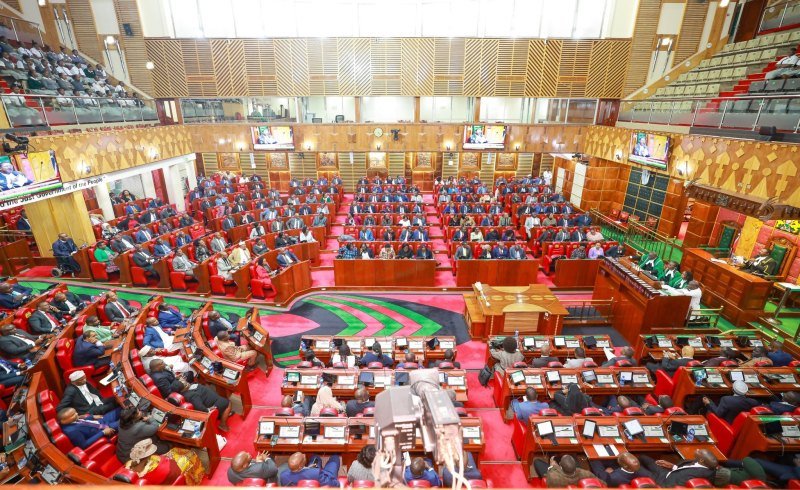
More than half of Kenya’s Members of Parliament were absent during the decisive vote on the Finance Bill 2026, leaving just 162 legislators to determine the fate of a law that will influence taxation and government spending in the next financial year.
The high level of absenteeism has sparked fresh debate over accountability and representation in Parliament.
Out of the National Assembly’s 349 elected and nominated members, only 162 participated in the Third Reading of the Bill. A total of 122 MPs supported the legislation while 40 voted against it, paving the way for the Bill to be sent to President William Ruto for assent.
Support from government affiliated lawmakers and members of the broad based administration ensured the Bill passed comfortably, with supporters making up 75.3% of those who voted.
The figures also reveal that only 46.4% of MPs took part in the final decision. A total of 187 legislators, representing 53.6% of the House, did not vote during one of the most significant parliamentary sessions of the year.
The Finance Bill was approved after lawmakers adopted recommendations from the Finance and National Planning Committee to remove several proposed tax measures that had attracted criticism. The revisions are expected to lower the government’s projected KSh120 billion in additional revenue intended to finance the KSh4.8 trillion 2026 to 2027 budget.
Questions over accountability
The government’s more cautious approach contrasts with the abandoned Finance Bill 2024, which triggered nationwide protests after proposing sweeping tax increases. This year’s legislation avoided many of those controversial measures.
Opposition MPs allied to former Deputy President Rigathi Gachagua unsuccessfully sought a recorded division vote that would have publicly identified how every MP voted. The Bill had also passed its Second Reading by acclamation, meaning individual voting records were not captured.
Political observers believe many legislators may have avoided a recorded vote because of the backlash experienced by MPs who supported the 2024 Finance Bill, with some facing protests targeting their homes and businesses.
The absence of more than half the House has nevertheless drawn widespread criticism. Many Kenyans argued on social media that failing to attend such an important sitting amounted to avoiding responsibility on an issue directly affecting taxpayers.
Others renewed calls to reduce the number of elected representatives, arguing Parliament should not make decisions affecting millions of citizens with less than half its members participating.