

For a long time, Safaricom was more than just a telecommunications company—it was a symbol of Kenya’s corporate success story. From pioneering mobile money through M-Pesa to delivering consistent shareholder returns, the company built a reputation rooted in innovation, reliability, and public confidence.
That reputation, however, is now being increasingly questioned.
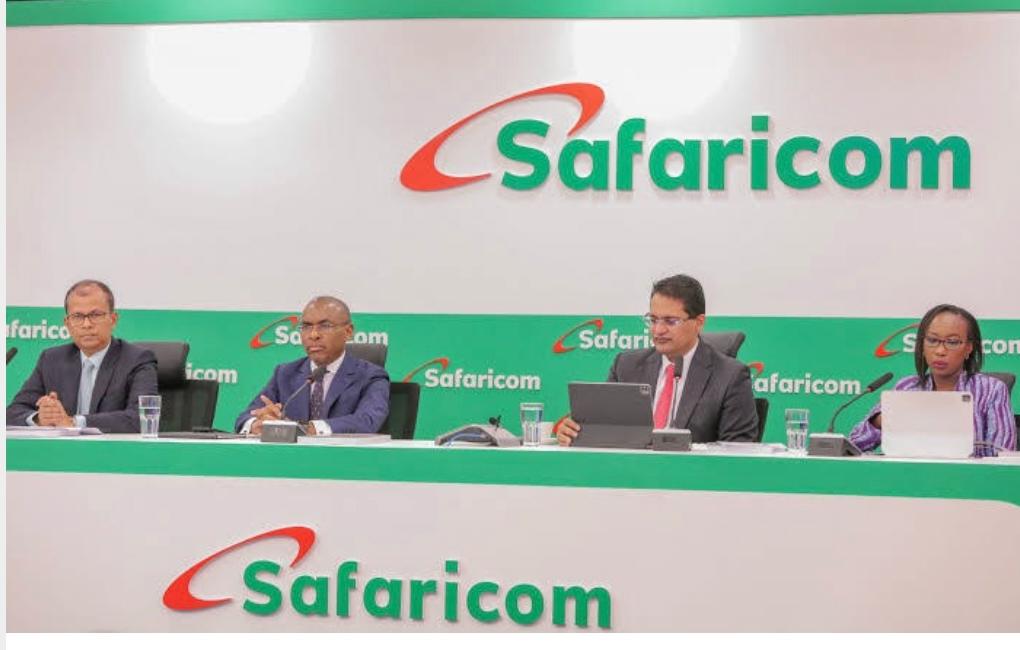
Despite maintaining strong financial performance and expanding its footprint beyond Kenya, a growing number of critics believe the company’s public standing has weakened under the leadership of CEO Peter Ndegwa and Chairman Adil Khawaja.
The issue, they argue, is not about numbers—it is about trust.
### Strong Performance, Lingering Doubts
On paper, Safaricom remains a powerhouse. It continues to post impressive revenues, dominate the telecom sector, and push into new markets such as Ethiopia.
But beneath that success lies a series of controversies that have shaped public perception.
One of the most defining moments came during the June 2024 protests against the Finance Bill. At the height of the demonstrations, many users experienced significant internet disruptions. While the company attributed the issue to technical challenges, including undersea cable problems, the timing raised eyebrows.
Even after the CEO issued a public apology and denied any intentional interference, skepticism persisted. For some, the incident became a turning point—fueling concerns about transparency and accountability.
### Data Privacy Concerns Emerge
Another major issue that drew attention involved allegations about how customer data was handled. Reports suggested that there could have been access to user information by state agencies in ways that raised fears of surveillance.
Safaricom strongly denied these claims, insisting it operates fully within legal and regulatory frameworks. However, the matter did not fade quietly. Civil society organizations and rights groups continued to demand clearer answers, keeping the debate alive in the public domain.
At the same time, tensions between the company and sections of the media appeared to escalate. Critics argued that Safaricom’s responses to investigative reports felt more defensive than transparent, signaling a shift from the openness that once defined its public engagement.
### Leadership and the Politics Question
Attention has also turned to the role of the company’s chairman, Adil Khawaja, particularly regarding perceived political connections.
While his professional credentials are widely respected, his acknowledged close ties with the current administration have raised questions among observers. Some argue that such relationships, even if legitimate, create an appearance of closeness between corporate leadership and political power.
Given Safaricom’s central role in Kenya’s economy—handling vast volumes of communication and financial transactions—any perception of political influence attracts heightened scrutiny.
There have also been concerns about overlapping professional interests linked to his legal career, with critics suggesting that stronger safeguards around conflicts of interest could help reinforce confidence.
### Customers Speak Out
At the same time, customer sentiment appears to be shifting.
Online platforms have seen a rise in complaints about network quality, data pricing, and customer service experiences. While such issues are not uncommon for a company with millions of users, the consistency of these concerns has added to the broader narrative of dissatisfaction.
For some observers, this reflects a company that may be growing too comfortable in its dominant position.
### A Critical Moment for the Brand
Safaricom’s influence in Kenya remains undeniable. It is still one of the region’s most profitable and strategically important companies.
Yet, its current leadership faces a different kind of challenge—one that goes beyond financial metrics.
Questions around transparency, governance, customer experience, and political neutrality have combined to create a period of intense scrutiny. Whether these concerns represent temporary turbulence or a deeper shift in public trust is still up for debate.
As the company looks toward future changes in ownership and leadership direction, one thing is clear: restoring confidence may prove just as important as sustaining growth.
In the end, Safaricom’s legacy will not be defined by profits alone, but by how well it responds to the expectations of the millions who rely on it every day.