
There are moments in history when nations merely witness change, and there are moments when they help shape it. Today, Kenya finds itself in the latter category.
Old assumptions are being challenged across the globe at a time when power is slowly shifting to the Global South. New economic centers are emerging. Technology is rewriting the rules of commerce and communication. Yet many of the institutions that govern international affairs were designed for a different era, a different century, and a different world.
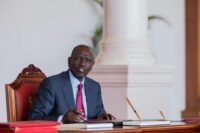
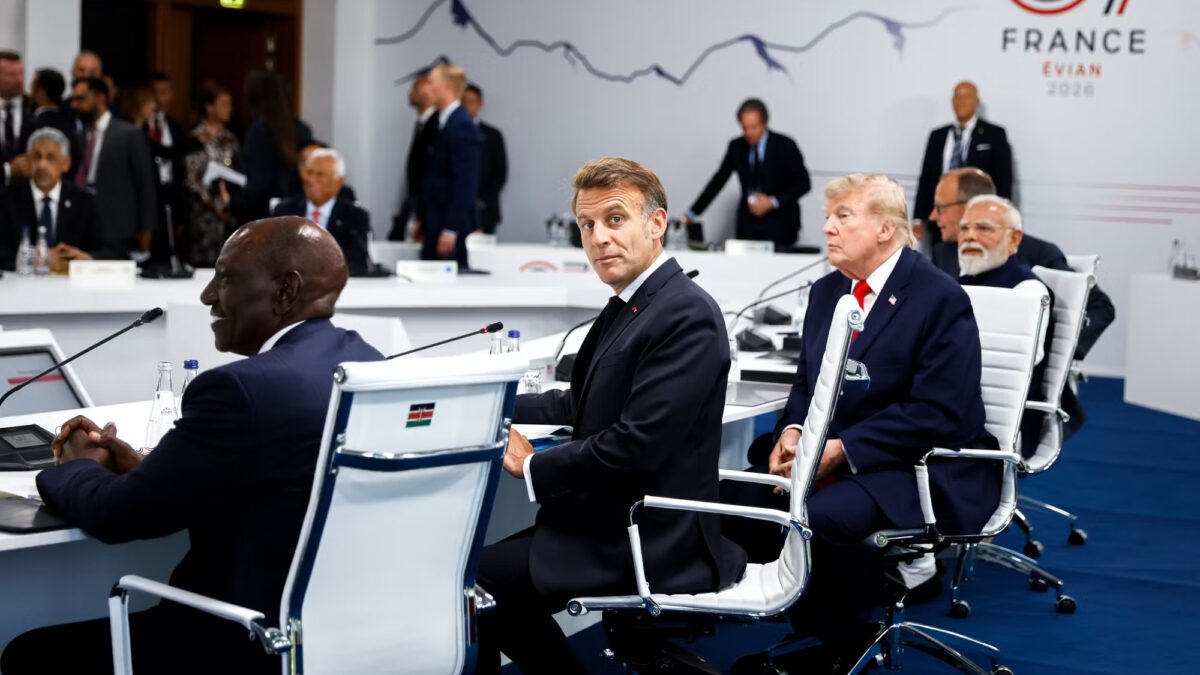
That is why President William Ruto’s message at the G7 Summit in Evian, France, deserves careful attention. Not only from Kenyans, but from Africans and global leaders alike.
His call for a more inclusive international is genuinely about fairness. Ensuring that Africa, home to more than 1.4 billion people and one of the world’s fastest-growing populations, has a meaningful voice in decisions that affect its future.
At a time when many nations are looking inward, Kenya is helping lead a conversation about a more balanced and representative global system. That leadership matters.
A nation’s influence abroad begins with confidence at home.
Over the past several years, Kenya has continued to position itself as one of Africa’s most dynamic economic hubs.
While challenges remain, as they do in every developing economy, the direction of Kenya’s travel is increasingly clear, determined to become a leading destination for investment, innovation, and enterprise in the Global South.
The President’s advocacy for fairer access to development financing speaks directly to one of Africa’s greatest obstacles.
Since our self-rule, many African countries have paid disproportionately high borrowing costs to their former colonial masters despite possessing enormous economic potential.
As President Ruto argued, Africa should not be judged through outdated assumptions or exaggerated perceptions of risk.
The numbers tell an important story. Kenya’s trade volume climbed to KSh 3.8 trillion in 2024, while export earnings surpassed KSh 1.1 trillion, reflecting growing global demand for Kenyan products and services.
Foreign investors continue to view the country as a strategic destination, with hundreds of millions of dollars flowing into the economy annually.
At the same time, Kenya’s leadership within the East African Community and the African Continental Free Trade Area is expanding opportunities for businesses to reach a market of more than one billion Africans.
Behind those figures are real people. The entrepreneur in Nairobi building a technology startup, the farmer in Uasin Gishu seeking access to new markets, and a young graduate in Ringa Kojwach hoping to find opportunities in an expanding economy.
When Kenya speaks about reforming global financial systems, it is ultimately speaking about unlocking opportunities for millions of Africans striving for prosperity.
Championing Innovation and Africa’s Future Workforce
The future will belong to societies that embrace innovation, invest in talent, and prepare their people for technological transformation.
On this front, Africa possesses an extraordinary advantage.
By 2050, the continent is projected to account for approximately 40 percent of the global workforce and nearly a quarter of the world’s population. This demographic reality represents one of the greatest economic opportunities of the twenty-first century.
President Ruto’s insistence that Africa must be included in conversations about Artificial Intelligence (AI) and emerging technologies is therefore both timely and necessary.
The continent cannot afford to be merely a consumer of technology developed elsewhere. Africa must help design, govern, and deploy the technologies that will shape future economies.
Kenya is already demonstrating what this future can look like.
From mobile financial innovation to digital entrepreneurship, from expanding internet connectivity to growing investments in the digital economy, Kenya has consistently shown an ability to adapt and lead.
The government’s digital agenda is delivering measurable results. Kenya’s ICT sector has consistently ranked among the fastest-growing segments of the economy, expanding at an average rate of 10.8 per cent annually.
The digital economy is expected to contribute 9.24 per cent of GDP, while ongoing investments in fibre connectivity, digital public services, innovation hubs and AI readiness are positioning Kenya as a leading technology and innovation powerhouse in Africa.
The objective is human advancement, beyond technological advancement.
Every digital platform created, innovation hub opened, and young Kenyan trained in future skills strengthens the country’s competitiveness and contributes to Africa’s broader transformation.
Advancing Inclusive Development and Shared Prosperity
Economic growth means little if it does not improve lives.
That is why the broader conversation about global reform is inseparable from the everyday concerns of ordinary citizens.
Infrastructure, healthcare, food security, education, and energy access remain central priorities across the continent.
President Ruto’s call for a new partnership between Africa and the world reflects a growing recognition that sustainable development requires genuine collaboration rather than dependency.
Africa possesses vast natural resources, significant renewable energy potential, extensive arable land, and one of the youngest populations on earth. What is needed is a framework that allows these strengths to flourish.
Kenya’s own development journey offers a glimpse of what is possible.
Billions of shillings continue to be invested in strategic infrastructure projects that connect farmers to markets, businesses to consumers, and communities to opportunity.
Investments in healthcare reforms and social protection are working to ensure that growth translates into improved quality of life for ordinary citizens.
Meanwhile, Kenya has become a global clean-energy success story, generating more than 90 per cent of its electricity from renewable sources and demonstrating that economic growth and environmental stewardship can advance hand in hand.
These achievements illustrate the immense potential that can be unlocked across Africa when investment, innovation and inclusive policies come together in pursuit of shared prosperity.
The goal is to create conditions in which communities can thrive, businesses can grow, and future generations inherit stronger economies than those that came before them.
Kenya’s voice on the global stage is increasingly aligned with this vision of shared prosperity.
The world is changing, and Africa is no longer standing on the sidelines. The continent is becoming an indispensable partner in solving global challenges, driving economic growth, and shaping the future of technology, energy, and development.
President Ruto’s message at the G7 Summit is grounded not in grievance but in opportunity. Not calling for a confrontation, but in partnership and inclusion, and certainly not division.
Kenya’s role in these conversations should inspire confidence.
As citizens, we may debate policies, priorities, and politics. That is the essence of democracy. But we can also recognize when our country is helping advance a larger vision where Africa occupies its rightful place at the global table.
Africa’s moment is arriving.
Kenya must continue helping lead the way.