

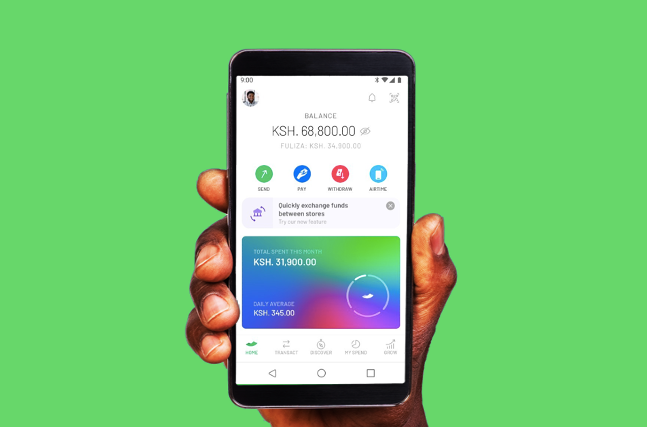
Kenya has long been recognized as a global leader in mobile money adoption, and that infrastructure has quietly become one of the most powerful saving tools available to ordinary Kenyans. Two decades ago, saving typically meant either keeping cash at home, joining a chama, or opening a bank account that required a minimum balance many people could not maintain. Today, a smartphone or even a basic feature phone is enough to start saving in a disciplined, trackable way. This article explores the practical mobile-based saving options available in Kenya and how to use them effectively.
Why Mobile Saving Tools Work So Well
The biggest advantage of mobile saving tools is friction reduction. Traditional banking often requires a trip to a branch, a minimum opening balance, and paperwork that can be intimidating for first-time savers. Mobile money-linked savings products remove most of these barriers. You can open an account from your phone in minutes, deposit as little as a few hundred shillings, and track your balance instantly. For many Kenyans, this accessibility is the difference between saving consistently and not saving at all.
M-Pesa Lock Savings
Safaricom’s M-Pesa app includes a lock savings feature that allows users to set aside money for a fixed period, during which it cannot be withdrawn on impulse. This is particularly useful for goal-based saving, such as putting money aside for school fees, a deposit on land, or a planned purchase. The psychological value here is significant: by making the money temporarily inaccessible, you remove the daily temptation to dip into it for small, unplanned expenses. When setting a lock savings goal, be realistic about the duration. Locking money for an unrealistically long period may tempt you to break the commitment altogether if an emergency arises, so consider keeping a separate, more liquid emergency fund alongside any locked savings.
M-Shwari and KCB M-Pesa
M-Shwari, a partnership between Safaricom and NCBA, and KCB M-Pesa, a similar partnership with KCB Bank, allow users to save directly from their M-Pesa wallet into an interest-earning account, with the option to access short-term loans based on saving and transaction history. The saving side of these products is straightforward: money moved into the savings account earns interest over time, and the more consistently you save and avoid over-borrowing, the more your loan eligibility tends to grow. Many users find it helpful to treat the savings side of these products as their primary purpose, viewing the borrowing feature as a backup option rather than a routine part of their monthly financial cycle. It is worth being cautious with the lending side of these products. The short-term loans can carry facilitation fees that translate into a high effective interest rate when annualized, so they are best treated as an emergency tool rather than a routine source of funds.
Fuliza and Why It Is Not a Savings Tool
It is worth pausing on Fuliza, Safaricom’s overdraft facility, because many users mistakenly think of it as part of their financial cushion. Fuliza allows you to complete an M-Pesa transaction even when your balance is insufficient, with the shortfall repaid automatically once you next receive money, along with a daily fee. While convenient in a genuine emergency, relying on Fuliza regularly is effectively borrowing against your next inflow at a cost, and it can quietly erode a budget if used as a substitute for actual savings. A better long-term approach is to build a small emergency buffer specifically so that Fuliza becomes unnecessary for routine shortfalls.
Digital Money Market Funds Accessible via Mobile
Several licensed fund managers in Kenya now offer money market funds that can be opened, funded, and monitored entirely through a mobile app or USSD code, often with minimum investments as low as a few hundred or a few thousand shillings. These funds pool investor money into relatively low-risk instruments such as treasury bills, fixed deposits, and commercial paper, and they typically offer better returns than a standard bank savings account, while still allowing withdrawals within a few business days. For money you do not need instantly but might require within the next year, a money market fund can be a reasonable middle ground between a low-yield savings account and higher-risk investments.
Sacco Mobile Platforms
Many savings and credit cooperative organizations, commonly known as saccos, now offer mobile apps or USSD access that allow members to deposit savings, check their share balance, and apply for loans without visiting a physical branch. Combining the discipline of regular sacco contributions with the convenience of mobile access can be a powerful saving strategy, particularly because sacco dividends and interest on deposits are often more attractive than what a standard bank account offers.
Setting Up an Automatic Saving Habit
Whichever mobile tool you choose, the single most effective habit is automating the transfer of a fixed amount as soon as income arrives, rather than saving whatever happens to remain at the end of the month. Many mobile banking apps and some employers allow standing instructions that move a set amount into savings on payday. If your chosen platform does not support automation, set a recurring phone reminder for the day you are paid and treat the transfer as non-negotiable, in the same way you would treat rent or a loan repayment.
Avoiding Common Pitfalls
A few mistakes are common when people first start using mobile saving tools. One is spreading small amounts across too many apps and accounts, which makes it hard to track overall progress and can lead to forgotten balances. A better approach is to pick one or two tools that match your goals and stick with them. Another common mistake is treating short-term borrowing facilities, such as M-Shwari loans or Fuliza, as an extension of savings rather than a cost. Finally, some savers ignore the fees and terms attached to a product, only to be surprised by charges on withdrawal or by a lower-than-expected interest rate. Always read the terms displayed within the app before committing funds.
Matching Tools to Goals
Different saving goals call for different tools. For a short-term emergency fund you might want quickly, an M-Shwari or KCB M-Pesa savings account, or a simple M-Pesa lock savings, offers a reasonable balance of accessibility and mild growth. For medium-term goals such as a planned purchase within one to three years, a money market fund often provides a better return while remaining reasonably liquid. For longer-term goals such as retirement or a child’s future education, mobile tools can serve as a starting point, but should ideally be paired with more structured products such as pension schemes, unit trusts, or sacco long-term savings plans, which are covered in more detail in other guides in this series.
A Simple Comparison of Popular Options
It can help to think of mobile-accessible saving tools along a spectrum of liquidity and return. At one end, an M-Pesa lock savings account offers near-total control over timing but generally modest growth, making it ideal for short, specific goals where discipline is the main challenge rather than returns. In the middle, M-Shwari and KCB M-Pesa savings accounts offer a reasonable blend of accessibility and mild interest, alongside the option of small emergency loans, though these loans should be used sparingly. Further along the spectrum, mobile-accessible money market funds typically offer the strongest growth of the group, since they are investing in interest-bearing instruments rather than simply holding a deposit, but withdrawals usually take a day or two to process rather than being instant. Understanding where each tool sits on this spectrum helps you match the right product to the right goal, rather than defaulting to whichever app happens to be most heavily advertised.
Building Multiple Pockets for Different Goals
A practical strategy many Kenyans use successfully is maintaining several distinct saving pockets rather than one undifferentiated pool of money. This might mean a small, highly liquid M-Pesa or bank balance for genuine emergencies, a lock savings goal for a specific near-term purchase such as school fees or a planned trip, and a money market fund for medium-term goals where a few days’ withdrawal delay is not a problem. Keeping these pockets separate, rather than mixing them into one account, reduces the temptation to raid long-term savings for short-term wants, since each pocket has a clear, named purpose that makes withdrawing from it for something unrelated feel more deliberate and less like an easy default.
Frequently Asked Questions
Is money kept in mobile money-linked savings accounts safe?
Products like M-Shwari and KCB M-Pesa are backed by licensed, regulated banks, and deposits held with regulated banks in Kenya benefit from deposit protection up to a set limit administered by the Kenya Deposit Insurance Corporation. As with any financial product, it is worth confirming the specific protections that apply before committing large sums, and avoiding unregulated or unlicensed “saving” schemes that promise unusually high returns.
Can I use more than one mobile saving tool at the same time?
Yes, and for many people this is actually the most effective approach, since different tools serve different purposes, as outlined above. The key is to be intentional about why each pocket of money exists rather than opening multiple accounts without a clear plan, which can make it harder to track your overall financial position.
How quickly can I access my money if I need it urgently?
This varies by product. M-Pesa balances and standard M-Shwari or KCB M-Pesa savings are generally accessible almost instantly, while locked savings are, by design, inaccessible until the lock period ends unless the provider offers an early withdrawal option, often with a penalty. Money market fund withdrawals typically take one to three business days to reach your account. This is exactly why maintaining a small, fully liquid emergency pocket alongside less liquid savings matters.
Do I need a smartphone to use these tools?
Most of the core mobile money saving features, including M-Shwari, KCB M-Pesa, and standard M-Pesa functions, are accessible via USSD codes on basic feature phones, not just smartphones. Some money market fund providers, however, may require a smartphone app or web portal for account opening, though a growing number now support USSD-based transactions for existing customers as well.
Final Thoughts
Mobile money has made saving in Kenya more accessible than ever before, removing many of the traditional barriers of banking. The tools themselves, however, are only as effective as the habits built around them. Choose a small number of platforms that match your goals, automate your contributions wherever possible, and be deliberate about distinguishing between genuine savings tools and short-term borrowing facilities that can quietly cost more than they help. With consistency, even modest monthly amounts saved through mobile platforms can grow into a meaningful financial cushion over time.
This article is for general informational purposes and does not constitute personalized financial advice. Interest rates, fees, and terms mentioned are illustrative and may change; always confirm current terms directly with the provider before committing funds.

