

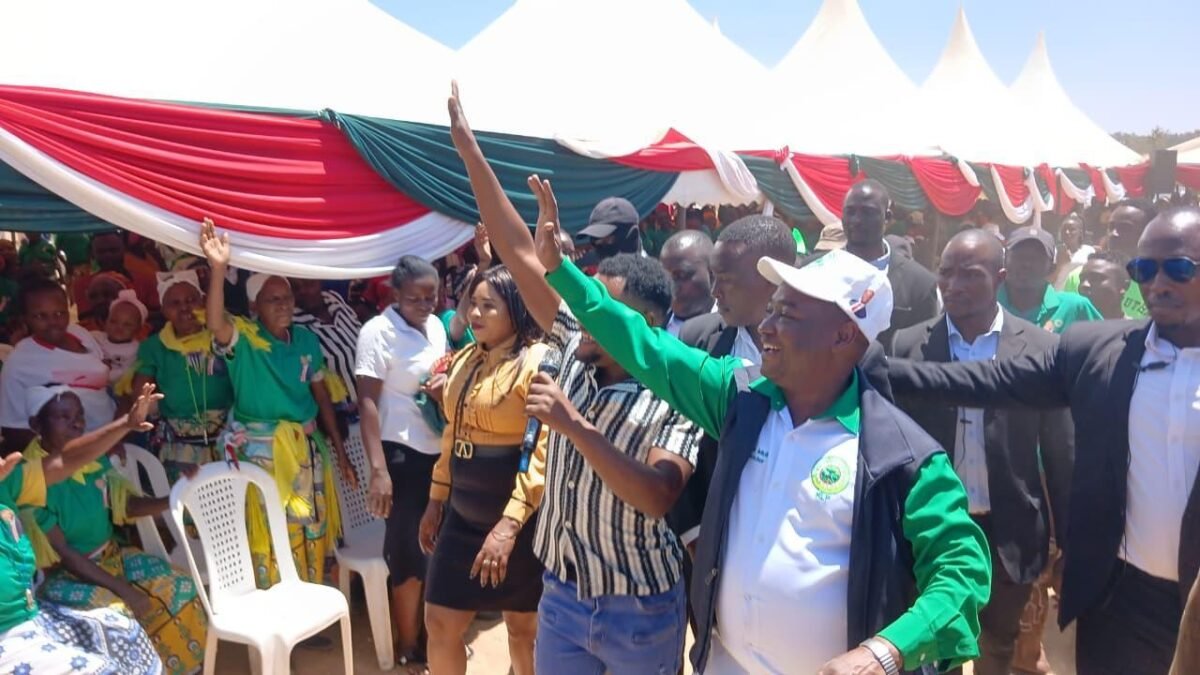
In a political landscape dominated by established regional kingpins, Augustus Kyalo Muli is betting that Ukambani’s voters are ready for a different proposition: a political vehicle that answers to the region first and chooses its national allies later.
The National Liberal Party (NLP) politician is positioning himself as neither a supporter of President William Ruto nor an appendage of Wiper leader Kalonzo Musyoka, as he seeks to build a regional base ahead of the 2027 General Election.
“I am not Ruto’s proxy. I am not Kalonzo’s spanner boy,” Muli says
The declaration captures the political gamble behind his emerging campaign to challenge Kalonzo’s long-standing dominance in Ukambani — and raises a broader question: can Muli pull a Sifuna-Nyoro in Ukambani by turning a new political vehicle, generational messaging and regional identity into national bargaining power?
Two names have increasingly featured in discussions about a new generation of political leaders: Edwin Sifuna, through the Linda Mwananchi movement after leaving ODM, and Ndindi Nyoro, who on August 17 formally left UDA to become party leader of the People’s Party of Kenya (PPK).
Their political approaches are different, but the underlying formula is similar: an independent political vehicle, generational positioning, regional identity and an attempt to convert local support into national bargaining power.
Muli is attempting to apply that formula in Ukambani through NLP.
The comparison comes as established regional political structures face growing pressure ahead of the 2027 elections.
In Mt Kenya, former Deputy President Rigathi Gachagua’s political influence is being challenged from several directions. Critics including Justin Muturi, Peter Munya and Lenny Kivuti have questioned efforts to consolidate regional parties under the Democratic Congress Party (DCP), while Deputy President Kithure Kindiki has emerged as another centre of influence.
Nyoro’s decision to lead PPK rather than fold into DCP or remain in UDA has added another layer to the region’s political fragmentation.
In Ukambani, Wiper leader Kalonzo Musyoka, who has dominated Kamba politics for two decades, is facing what appears to be one of the more structured challenges to his regional influence in recent years.
This time, the challenge is coming from within the region’s political establishment, through Muli’s NLP.
NLP Secretary-General Omondi K’Oyoo says the party has more than 200,000 registered members in Ukambani, including about 130,000 in Kitui County, and close to half a million nationally.
The figures are party claims and would require independent verification.
But the more immediate political signal came on August 13, when Muli addressed a large gathering at Kitui Stadium. Party officials put attendance at more than 6,000.
The gathering came days after Wiper hosted Sifuna at the same venue in an effort to boost its own mobilisation.
The turnout has since become part of the political conversation around Muli’s growing profile, although attendance at a single rally does not by itself establish a durable political base.
More significant is Muli’s political proposition.
The politician, who intends to contest the Kitui Central parliamentary seat in 2027, has increasingly presented himself as an independent alternative to both Ruto’s administration and the Kalonzo-led Wiper establishment.